
How Often Should My Child Be Training for Soccer? A Realistic Guide by Age
There's a real tension between wanting your child to develop and not wanting to push them too hard. Too little soccer training and they fall behind. Too much and they burn out, get injured, or lose their love for the game entirely.
So, how often should young players be training for soccer? The honest answer is that there's no single number that works for every player but there are principles — backed by research and by what I've seen across hundreds of players at every level — that can help you find the right balance for your child.
Key Takeaways
More training is not always better — quality, variety, and recovery matter more than volume
The "1 Hour Rule" (supported by the AAP and the Australian Institute of Sport) suggests a child should not train more hours per week than their age
Unstructured play — kicking a ball at the park (see my list of the best soccer fields around Melbourne), playing with friends, backyard games — is just as important for development as formal coaching, especially at younger ages
The biggest risk is overtraining, early burnout, and losing the love of the game
Private coaching is about adding quality to the hours spent in formal training during a player's week, not just more hours
Before We Talk About Training, Let's Talk About Playing
This is the distinction most people miss.
There's a difference between training and playing. Training is structured — a coach, a session plan, specific objectives, feedback. Playing is unstructured — kicking a ball around at the park with friends, playing in the backyard against siblings, pick-up games at school, futsal with mates on a Friday night. Just having fun playing football.
Both matter but unstructured play is wildly undervalued in modern youth football, and some of the most respected minds in the game have been saying this for years.
Pep Guardiola: "Play in the street — in my day we could and now maybe it's not possible — but play and play and play and that's all, and let them play day and night and let them make mistakes."
Johan Cruyff (founder of La Masia and whose foundation has built ~200 street football courts around the world): "Footballers from the street are more important than trained coaches."
Ron Greenwood (former England and West Ham United manager): "I don't believe skill was, or ever will be, the result of coaches. It is a result of a love affair between the child and the ball."
Arsène Wenger (one of the most influential managers in the history of the game, Arsenal’s longest-serving manager, Arsenal’s “Invincibles” manager): "Young players need freedom of expression to develop as creative players. They should be encouraged to try skills without fear of failure."
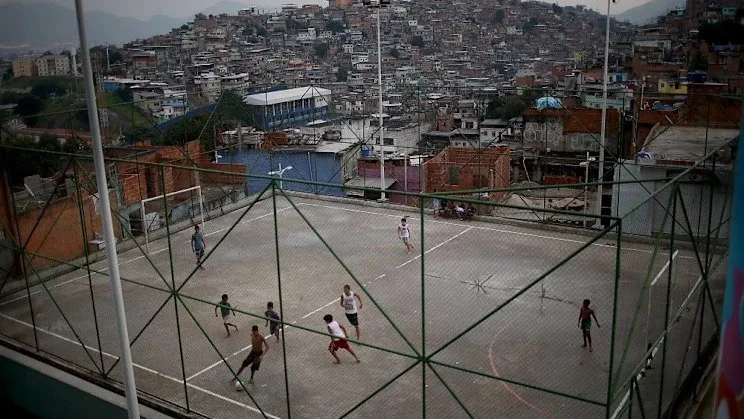
Think about where the most technically gifted players in history came from. The Brazilian kids growing up in favelas, playing barefoot on concrete with makeshift balls. Pelé, Ronaldinho, Neymar — all products of unstructured street football. A study published in Frontiers in Sports and Active Living found that this kind of environment — tight spaces, mixed ages, improvisation, no adult instruction — creates specific conditions that shape skill acquisition in ways that formal coaching alone cannot replicate (Uehara et al., 2021). The creativity, the close control, the ability to read unpredictable situations — these are developed through play, not drills.
This isn't to say coaching doesn't matter — it absolutely does – but coaching works best when it sits alongside a player who already has a relationship with the ball. A player who kicks the ball around at every opportunity, who plays at lunch and recess, who challenges their sibling in the backyard — that player arrives at a coaching session ready to absorb more, because they've already built comfort and confidence through play.
I fell in love with the game as a little kid in Tokyo playing 1v1 and 2v2 games with my siblings and friends in my apartment's foyer. Our front door was one goal and our neighbour's door, at the other end of the foyer, was the other (looking back I'm not sure we were the best neighbours). Then I remember playing with my friends at school, or at the park long after school was finished and my mum ringing me, upset that I still hadn't come home. That's where my passion for the game began — and there's no way structured training alone can create that. It's the love for the game that drives a player to want to do all the hard work that comes later. But also, this play was integral to making me comfortable with the ball at my feet and more creative than players who had only been taught by coaches how to play. In that sense, looking back, that unstructured time with the ball was probably more important for my development than any structured training I did as a junior.
So, when parents ask me how often their child should be training, my first question is: how often are they playing? Because a child who trains twice a week with their club but also kicks a ball around for 30 minutes most days is getting far more development than a child who trains three times a week but never touches a ball outside of organised sessions.
Soccer Training Volume by Age: What I Recommend
These are guidelines based on what I've seen work across the players I coach, combined with what the research supports. Every player is different — use these as a starting point and adjust based on your child's energy, motivation, and enjoyment.
Ages 4–7: Keep It Fun, Keep It Light
At this age, the priority is falling in love with the game. Structured training should be minimal — one or two formal sessions per week is plenty, and sessions should be short (30–60 minutes). The rest should be play. Kicking a ball in the backyard. Playing with friends / siblings / parents. Chasing the ball around without anyone telling them what to do.

This is also the age where multi-sport participation is most valuable. Playing other sports develops general athleticism, coordination, and movement skills that transfer directly to football later. The research is clear on this: early specialisation in a single sport at this age is associated with higher injury rates and burnout, while multi-sport participation builds the general athleticism that benefits football development later (AAP, 2024).
That said, structured coaching — even at this age — can make a real difference when it's done right. I currently coach players as young as 3 and 4, and one of my 6-year-olds has progressed so quickly through focused training that he's now doing drills I typically use with players more than double his age. The key at this age isn't whether to do structured coaching — it's making sure it doesn't replace the unstructured play that builds their love for the game. Both should exist alongside each other.
Total structured football: 1–2 sessions per week. Supplement with as much unstructured play as they want.
Ages 8–11: Building the Foundations
Players at this age are starting to develop real technical ability and can handle more structured coaching. Two to three club sessions per week plus a game on the weekend is a solid base. Targeted private coaching continues to make a meaningful difference at this age — giving focused attention to the technical foundations (ball mastery, first touch, both feet) that team training alone often can't provide.
As I discussed in my post on ball mastery, the touches gap between team training and focused individual work is significant. A player getting one private session per week alongside their club training is building their technical base far faster than a player relying on team training alone.
Unstructured play is still vital here. Encourage them to keep playing at school, at the park, with friends. This is the age where creativity and problem-solving on the ball are being wired in — and that happens through play, not instruction.
Total structured football: 2–3 club sessions + 1 game + optionally 1 private session. Continue encouraging unstructured play daily.
Ages 12–14: The Development Window
This is where things ramp up — particularly for players moving into NPL, where the commitment jumps to three or more sessions per week plus games across a 40-week season. The training volume increases significantly, and the quality of coaching and competition does too (choosing the right club at this point is critical).
For community-level players aspiring to reach NPL, this is the age where private coaching becomes most impactful. As I covered in my post on NPL vs community football, the gap between the two levels widens with every season. Targeted private sessions — focused on the specific technical and tactical skills that NPL trials are looking for — can bridge that gap more efficiently than adding extra team sessions.
At this age, recovery becomes genuinely important. Growing bodies are under significant physical stress, and the risk of overuse injuries increases. Rest days aren't laziness — they're essential for development.
Total structured football: 3–4 club sessions + 1 game + optionally 1–2 private sessions. At least one full rest day per week. Unstructured play still valuable but shouldn't feel like another obligation.
Ages 15+: Intensity and Intention
Players at this age who are serious about their development are typically training four to five times per week with their club, plus games. The intensity is higher, the physical demands are greater, and the tactical complexity increases.
Private coaching at this level shifts from building foundations to refining details — the specific technical or tactical elements that separate good NPL players from those who catch the eye of academy scouts. This might be improving weak-foot delivery, developing set-piece technique, or building game intelligence through video analysis sessions.
The burnout risk is real at this stage. Players who have been training at high volumes since they were young — especially those who specialised early — are the most vulnerable. Watch for signs: declining motivation, persistent fatigue, loss of enjoyment, recurring injuries. These aren't signs of weakness — they're signals that the load needs adjusting.
Total structured football: 4–5 club sessions + 1–2 games + optionally 1 private session. Recovery and rest are non-negotiable. Quality over quantity becomes even more critical.
The Burnout Problem
The American Academy of Pediatrics updated their clinical report on overtraining and burnout in young athletes in 2024, and the findings are worth paying attention to. They found that the "professionalization of youth sports" — the pressure to train more, specialise earlier, and treat junior football like a professional environment — is directly responsible for the overuse injuries, overtraining, and burnout that are increasingly common in youth sport. Their conclusion: there is "little to no evidence" that intense training and early specialisation are necessary to reach elite performance (AAP, 2024).
Research shows that 20–30% of elite young athletes experience overtraining, and 60% of young soccer players report multiple bouts of non-functional overreaching (AAP, 2024). These aren't just tired kids — this is a physiological condition where the body has been pushed beyond its ability to recover.
The AAP and the Australian Institute of Sport both endorse the "1 Hour Rule" as a practical guideline: a child should not train and compete for more hours per week than their age. So a 10-year-old should cap at roughly 10 hours of total football activity per week — including games, team training, private sessions, and any other structured sport.
The goal isn't to train as much as possible. It's to train as well as possible — and to make sure your child still loves the game at the end of it.
More is not always better. Players should always be wanting more — that's a great place to be. If they're training so often that they start dreading sessions, or spending the whole time looking forward to it being over, we're in trouble. To be clear, I'm not saying all training should be fun — especially as players get older, the ones who make it are the ones willing to make sacrifices. Early morning training. Gym work. Running sessions. Choosing to work on their touch in the backyard instead of turning on the PlayStation. But what drives those sacrifices is a genuine passion for the game and a motivation to reach the highest level. If that passion disappears due to burnout, the sacrifices stop — and so does the development.
It's not uncommon for players to want to train with me more and more — and I take that as a huge compliment. But I'm also careful about how much structured training a player takes on. They need to be at 100% in their club sessions and games, and they need time to just play. The best development happens when a player is hungry for more, not when they're running on empty.
Where Private Soccer Coaching Fits In
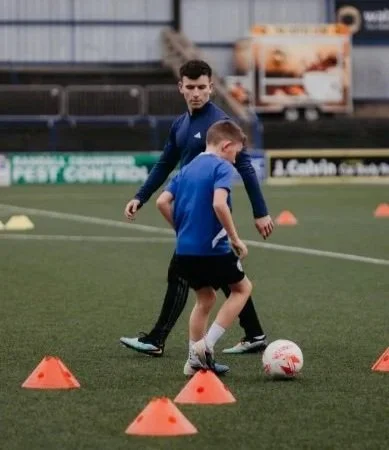
Private coaching should add quality to a player's development, not just quantity. A focused 60-minute session where every touch is intentional and every drill is tailored to what that player needs is worth more than two extra team sessions where they're sharing the ball with 20 other players and standing in line for half of it. I broke this down in detail in my post on whether private coaching is worth it.
For younger players, one private session per week alongside their club training and plenty of unstructured play is a strong combination. For older players (11+) who are serious about progressing, one to two private sessions per week — focused on the specific areas they need to develop — is the sweet spot. Any more than that and you risk overloading them.
The players I see develop fastest aren't the ones who train the most. They're the ones who train with intention, play with freedom, and have enough recovery time to actually absorb what they've learned. That balance is what I try to help every family find.
Ready to Find the Right Balance?
If you're unsure about the right training load for your child, or you want to make sure the training they're doing is as effective as possible, that's exactly the kind of conversation I have with families every week. Part of what I do — beyond the coaching itself — is help parents and players navigate these decisions based on where the player is right now and where they want to go.
I offer a free trial session so you can see what focused, individual development looks like. Get in touch to book yours, or visit cdprivatesoccercoaching.com.au to learn more.
Frequently Asked Questions
-
It depends on age. For ages 4–7, one to two structured sessions per week is plenty. Ages 8–11 can handle two to three club sessions plus a game. Ages 12–14 typically train three to four times per week, and 15+ may train four to five times. These are structured sessions only — unstructured play on top of this is encouraged at every age.
-
Yes. The AAP (2024) recommends that children should not train and compete for more hours per week than their age, and should have at least one full rest day per week. Overtraining leads to overuse injuries, psychological burnout, and in some cases players leaving the sport entirely.
-
Most players begin competitive club football between ages 8 and 11. NPL junior competitions in Victoria start at U13. There's no rush to compete early — players who build strong technical foundations through a combination of coaching and unstructured play are often better prepared when they do step into competitive environments.
-
Multi-sport participation is strongly recommended before age 12–13. Research consistently shows that early diversifiers achieve equivalent or better elite outcomes than early specialisers, with significantly lower injury rates and less burnout (AAP, 2024). Playing other sports builds general athleticism and coordination that directly benefits football later.