
How Watching Yourself (And Others) Play Can Make You a Better Footballer
There's a gap in almost every young player's development that most people never properly address. It sits between what a player thinks they're doing on the pitch and what they're actually doing.
A player might feel like they're scanning before every pass. But when you watch the footage back, they looked up once in ten seconds. They might think they're getting into good positions off the ball. The footage shows them standing still while the game moves around them. They might feel like they played with intensity. But watching it back, they look like they're moving in slow motion. The reality is often more nuanced — and more useful — than the feeling.
This isn't about criticising players, but rather creating awareness. And it's why every serious football environment in the world — from Premier League first teams to elite youth academies — uses video analysis as a core part of player development. The question is: why aren't more young players doing it?
Key Takeaways
There's often a significant gap between what a player thinks they're doing on the pitch and what they're actually doing — video closes that gap
Professional clubs and elite academies use video review as a standard development tool — it's a fundamental part of getting better
A systematic review of research found that video-based training consistently improves anticipation and decision-making in football players
Watching yourself play builds football IQ in a way that on-pitch coaching alone cannot — you see the game from a perspective you never get while playing
Combining your own game footage with professional examples accelerates understanding of positioning, movement, and decision-making
How Pros Get Better Off the Pitch
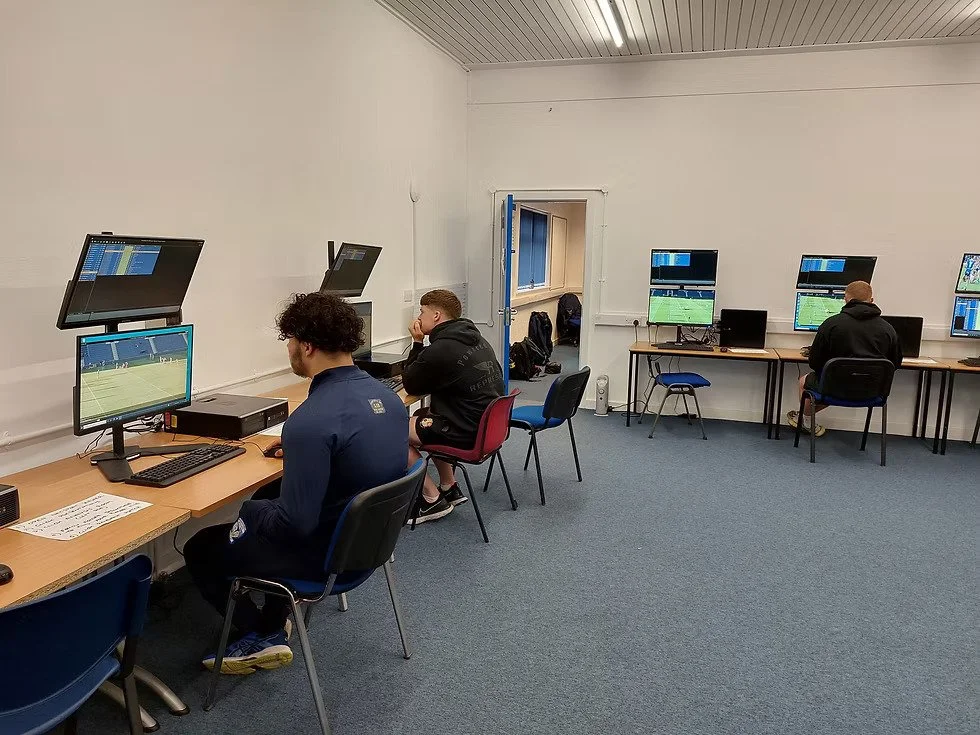
At the professional level, players don't just train and play. They spend hours each week in front of a screen — reviewing their own performances, analysing opposition, and studying tactical patterns.
At academy level, the same approach applies. Ajax famously created a dedicated "video behavioural analyst" role within their first-team staff, combining performance analysis with sport psychology to give players a deeper understanding of their own on-pitch behaviours and decision-making patterns (International Journal of Sport and Exercise Psychology, 2025). That's how seriously the best clubs in the world take this.
During my time as a football player at the University of Notre Dame, video review was embedded into every part of the program. Every training session was filmed. Every game was broken down in detail. We spent hours with coaches going through footage — not just of games, but of our own training. The emphasis the coaches placed on it was eye-opening to me, but I soon realised why. The players who performed best on game day, and the ones whose skills improved fastest, were the ones who put in the most hours away from the training field. They got to know their own games in intricate detail by reviewing film, and they studied the top professionals to learn from what they were doing and try to replicate it.
We're incredibly fortunate to have access to hundreds of thousands — probably millions — of hours of footage of professional players at our fingertips. These are the best players in the world for a reason, and you can learn from what they're doing right from your screen. Take advantage of that.
What Video Review Actually Reveals
The power of watching yourself play is that it makes the invisible visible. On the pitch, the game moves too fast to process everything. You're reacting, competing, running — there's no time to step back and evaluate. But on screen, you can pause, rewind, and see exactly what happened and why.
Here are some of the most common things players discover when they watch their own footage for the first time:
They have more time than they think. Players who feel rushed on the ball often discover, watching back, that they actually had an extra second or two. The panic was internal, not caused by the situation.
They're not scanning. Almost every young player I review thinks they scan before receiving. The footage almost always tells a different story. This connects directly to what I covered in my post on what scouts look for — scanning frequency is one of the strongest differentiators between selected and non-selected players.
Their first touch is letting them down. A heavy first touch that puts the player under pressure often looks and feels different in real time versus on screen. On footage, you can clearly see how a better first touch would have opened up an entirely different set of options.
They're reactive, not proactive. This is a big one. They're making decisions after the ball arrives instead of before it. They're chasing passes after they've been played rather than anticipating them. They're waiting for the game to come to them instead of dictating it. The players who look like they have more time than everyone else on the pitch aren't faster — they've already decided what they're doing before the ball reaches them. They're demanding the ball, making runs, creating options. Video makes the difference between reactive and proactive players immediately obvious — and once a player sees it in themselves, the shift can be dramatic.
Their off-the-ball movement is passive. This is the biggest one. Players tend to focus on what they did when they had the ball. But the footage reveals what they did during the other 87 minutes — and that's where the real learning is. Positioning, movement into space, defensive shape, recovery runs — these are the things that separate good players from the ones who catch a scout's eye.
Their body shape before receiving matters more than they realise. Whether they're open or closed to the play, which direction they're facing, whether they've set themselves to play forward or are forced to go backwards — all of this is visible on footage and almost impossible to self-assess in real time.
I had one player who was very good technically — the kind of ability that should have been producing bigger impacts in games than it was. When I reviewed their game footage, I immediately understood why. They had fallen into a daze. They'd played so many games that it had become routine — same habits, same patterns, just getting through the match. They played well, but just well, and I knew they could be so much more. When we sat down and watched the footage together, they couldn't believe how slow and passive they looked. The difference in their most recent games has been profound — and they didn't get better technically. They were simply faced with the reality of what they were actually doing instead of what they thought they were doing, and realised they had another gear.
I had another player who was frustrated that their teammates weren't passing to them. When we watched the footage together, the reason was obvious — they weren't presenting in good positions to receive, and the few times they did find space, they weren't demanding the ball. We talked through it, they could see it clearly on screen, and the issue disappeared in future games. No one had to tell their teammates to pass more. The player just started making themselves available.
It's Not Just About Mistakes
One of the biggest misconceptions about video review is that it's about picking apart what went wrong. It's not — or at least, it shouldn't be.
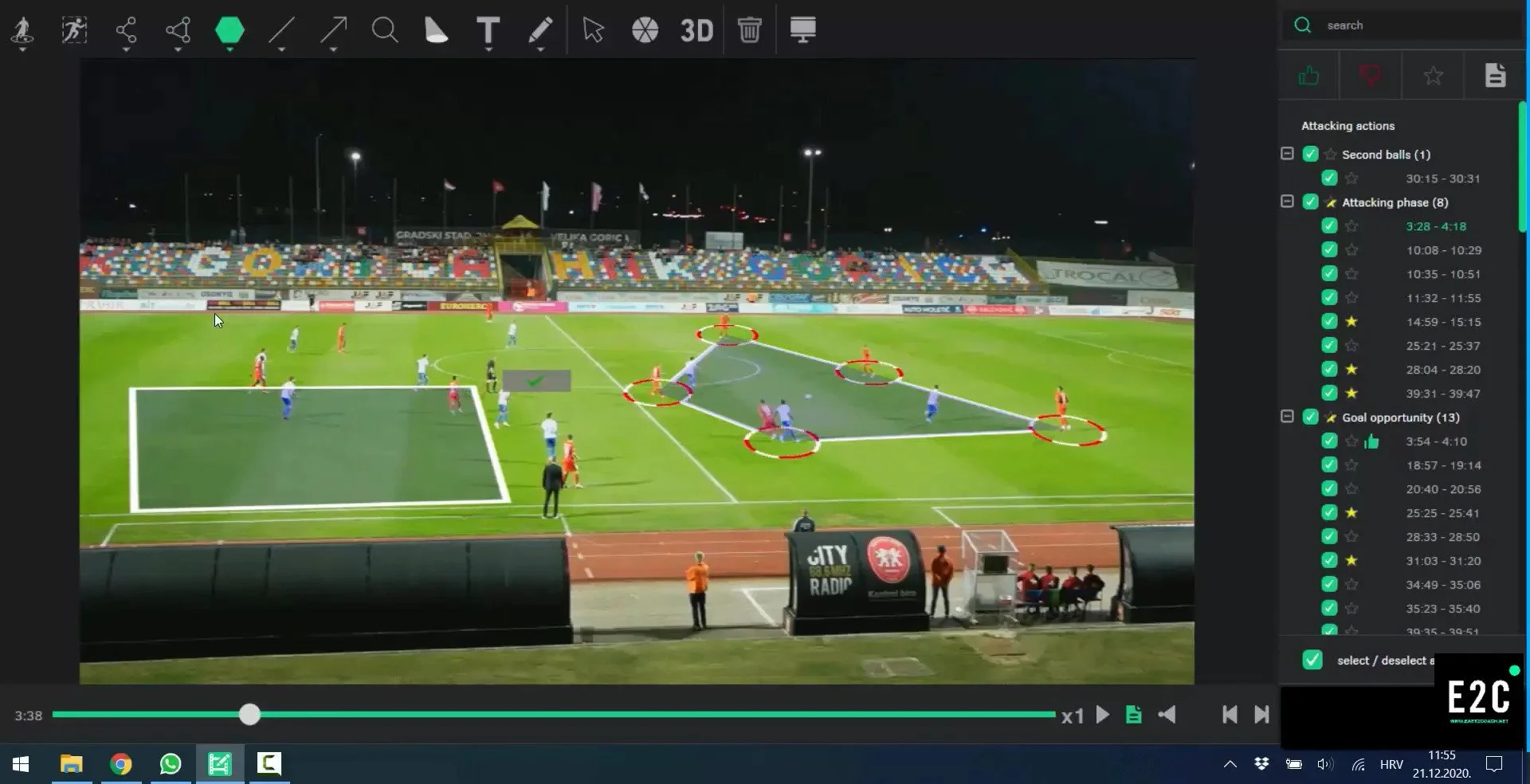
The way I run my video analysis sessions, we're doing three things. First, we review the player's own game footage — identifying moments that went well and moments that could improve, and understanding why in each case. Second, I bring in professional match footage as comparison — showing what elite players do in similar situations, so the player can see what "good" looks like at the highest level. And third — and this is the part I find most valuable — I'll pause professional footage and ask the player what they'd do in that situation. Where would you pass? Where should the midfielder be? What's the striker doing wrong here? Then we play it and see what actually happens.
The thing is, professionals make mistakes all the time too. If they didn't, their coaches wouldn't be standing on the edge of the technical area screaming for 90 minutes every game! So, we watch them make mistakes as well, and discuss what they could have done better. This matters more than people realise. A lot of young players think they have to be perfect, and that fear makes them play safe, stay in their shell, and avoid taking risks. Once they see that the best players in the world get it wrong regularly, it frees them up. It gives them permission to try things and learn from what happens, rather than being paralysed by the fear of making a mistake.
This interactive element is where football IQ gets built. It's not me lecturing — it's the player learning to read the game from a perspective they never get while playing. Over time, this translates directly to the pitch. Players start recognising patterns faster, anticipating what's about to happen, and making better decisions under pressure.
The research supports this. A systematic review published in Frontiers in Human Neuroscience found that across multiple studies, players who received video-based training consistently performed better in anticipation and decision-making than those who didn't (Zhao et al., 2022). A separate study on academy players aged around 14 found that just six weeks of video-based training twice per week improved successful decision-making by 34% and response time by 24% (Romeas et al., 2016).
Clearly, video analysis provides a significant, measurable step forward in how a player reads and reacts to the game.
Building Football IQ in the Classroom
I think of video analysis as the classroom component of football development. The training pitch is where you build physical and technical skills . The video room is where you build understanding.
On the pitch, I can tell a player to check their shoulder before receiving. In a video session, I can show them a freeze-frame of themselves receiving the ball with no awareness of the defender behind them, and then show them a clip of Pedri in the same situation — scanning three times in the five seconds before the ball arrives and already knowing exactly where to play it. The difference is immediately obvious, and the lesson sticks in a way that verbal instruction alone often doesn't.
This is particularly powerful for players who improve technically in my on-pitch sessions but then struggle to translate that into games. The ability is there — their feet can do it, but the game intelligence to use it effectively hasn't caught up yet. The player who can dribble past defenders but always makes the wrong decision about when to dribble (covered in more detail in my guide to 1v1 dribbling) . The player with a great pass but who doesn't see the run until it's too late. These are players whose development is being limited not by their feet but by their understanding — and that understanding lives between the ears, not in their boots. Video is the most efficient tool to train it.
Ready to See Your Game Differently?
Video analysis is one of the most underused development tools in youth football — and one of the most effective. If your child is serious about improving, seeing their own game on screen alongside a coach who can break it down is a step that accelerates development in ways that on-pitch training alone can't.
I offer Match Video Analysis Sessions via Zoom — so they are accessible no matter where you are based — where we review your child's game footage together, bring in professional examples, and give them clear takeaways to focus on in their next game. You can find full details and pricing on my Video Analysis page.
I also offer a free trial training session if you want to see what focused, individual coaching looks like on the pitch, and decide for yourself if private coaching is worth it. Get in touch to book, or visit cdprivatesoccercoaching.com.au to learn more.
FAQ
What footage do I need to send for video analysis?
A full match recording is ideal — even a phone recording from the sideline is fine. The most important thing is that we can clearly see your child’s positioning, movement, and involvement in the game.
How long is a video analysis session?
Each Match Video Analysis Session runs for around 45 minutes. This is built on top of 2–3 hours of preparation, where the full game is reviewed and key moments are selected before the session.
Can this help if my child plays community football?
Yes — in many cases, this is where it has the biggest impact (especially if these players want to make the jump to NPL). Players at community level rarely get access to this type of feedback, and it can quickly improve decision-making, positioning, and overall understanding of the game.
Do I need to be on the call as a parent?
No — the session is run directly with the player so they can engage with the analysis and ask questions. Parents are welcome to sit in if they’d like, but the focus is on helping the player understand their own game.
References
Zhao, X., et al. (2022). The effects of video-based training on anticipation and decision-making in football players: A systematic review. Frontiers in Human Neuroscience. https://www.frontiersin.org/journals/human-neuroscience/articles/10.3389/fnhum.2022.945067/full
Romeas, T., Guldner, A., & Faubert, J. (2016). 3D-Multiple Object Tracking training task improves passing decision-making accuracy in soccer players. Psychology of Sport and Exercise, 22, 1–9. https://pmc.ncbi.nlm.nih.gov/articles/PMC5968940/
International Journal of Sport and Exercise Psychology. (2025). Video behavioural analysis in elite football environments. (Reference for Ajax role)