
NPL vs Community Soccer in Melbourne: Which Pathway is Right for Your Child?
If your child plays community football in Melbourne and has started to stand out, you've probably heard the question — or asked it yourself: "Should they try out for NPL?"
It's the not-so-straightforward decision every serious football parent in Victoria faces at some point. NPL offers a higher level of competition, better coaching, and a clearer pathway to elite football. But it also demands significantly more time, money, and commitment — and moving too early can do more harm than good.
I've coached across both levels. I've helped players make the jump from community to NPL, and I've seen what happens when players move before they're ready. This post is an honest breakdown of both pathways, what each one offers, and how to make the right decision for your child.
Key Takeaways
Community football is the foundation — it's where most players develop their love of the game and build core skills
NPL demands a serious step up in commitment: approximately 40 weeks, 160+ sessions, and 30+ competitive games per season
NPL fees typically range from $1,500 to $3,000+ per season depending on the club and age group — significantly more than community registration
Moving to NPL too early can damage confidence and development — readiness matters more than age
Targeted private coaching can bridge the gap and prepare them for the transition
What Community Football Looks Like
Community football in Victoria is where the vast majority of junior players play. It's club-based, locally organised, and runs through Football Victoria's community competition structure. Seasons are shorter than NPL — typically around 15–20 games — with one or two training sessions per week. Registration fees are generally in the $300–$600 range per season, making it accessible for most families.

Junior boys community team (Sandringham SC) celebrate a win.
Community football plays a critical role. It's where players fall in love with the game, learn to play with friends, handle winning and losing, and develop foundations without excessive pressure — particularly at younger ages where it's often the only structured option available*.
The coaching varies significantly. Some clubs have excellent, qualified coaches who prioritise development. Others rely on parent volunteers who are passionate but may lack formal coaching education. Your child's development experience can depend heavily on which club and which coach they happen to get (so you should choose carefully). This inconsistency is the biggest limitation of community football.
At community level, most teams train once or twice a week in the evenings at their local ground, and play on weekends across a season that runs roughly from March to August. Squads can be open — i.e., there are no trials or cuts, and clubs aim to give all registered players game time – or you may get A’s, B’s and so on depending on demand. For many families, this is the appeal: your child plays regularly, stays active, and develops socially without the pressure of selection or the demands of a year-round commitment.
The standard of play varies widely, even within the same age group. Your child might face a well-organised team one week and a team missing half its players the next. This inconsistency means players aren't always being challenged, which can be fine for those who just want to enjoy the game — but can frustrate players who are ready for more.
*It's worth noting that while NPL competition formally starts at U13, many NPL clubs run development or pre-NPL programs for younger age groups (typically U9–U12) that feed directly into their junior squads. Clubs will generally favour retaining players who have come through their own development pathway, so getting established at an NPL club early — even at pre-NPL level — can make the transition significantly smoother when the time comes. This doesn't mean community football is the wrong choice at younger ages, but it's something to be aware of if your child has clear aspirations.
What NPL Looks Like
The NPL (National Premier Leagues) is the highest level of youth football competition in Victoria, sitting directly below A-League academy programs in the pathway. From 2026, the junior competitions have been restructured and rebranded — for example, the boys' JBNPL is now the Boys Victorian Youth Premier League (BVYPL), split into tiered divisions based on aggregate club performance. The girls' NPL pathway has its own structure, but the commitment level, trial process, and standard of competition are similar across both.
Entry is through trials, which typically take place in October each year, with expressions of interest usually opening in August or September. Players submit expressions of interest to the clubs they're targeting – whether that's South Melbourne, Oakleigh Cannons, FC Bulleen, Glen Eira or any of the other NPL clubs across Melbourne – attend trial sessions, and are either offered a place or informed they've been unsuccessful. Squads are limited — most clubs field one team per age group — so the process is genuinely selective.
The commitment is a serious step up. According to Football Victoria, the NPL junior season covers approximately 40 weeks, with 30+ fixtured games and around 160 training sessions across the year. Training sessions are typically 90 minutes, three times per week, and run by coaches holding a minimum of a Football Victoria C-Licence (often B-Licence or higher). Sessions are structured around Football Australia's national curriculum, covering technical, tactical, physical, and psychological development. Many clubs also offer strength and conditioning programs, video analysis (although still an underused and often poorly executed tool so it is something we offer if you are missing out), and access to a Technical Director who oversees the broader development pathway. Players are expected to be available across school holidays and long weekends — this is a year-round commitment for the whole family, not just the player.
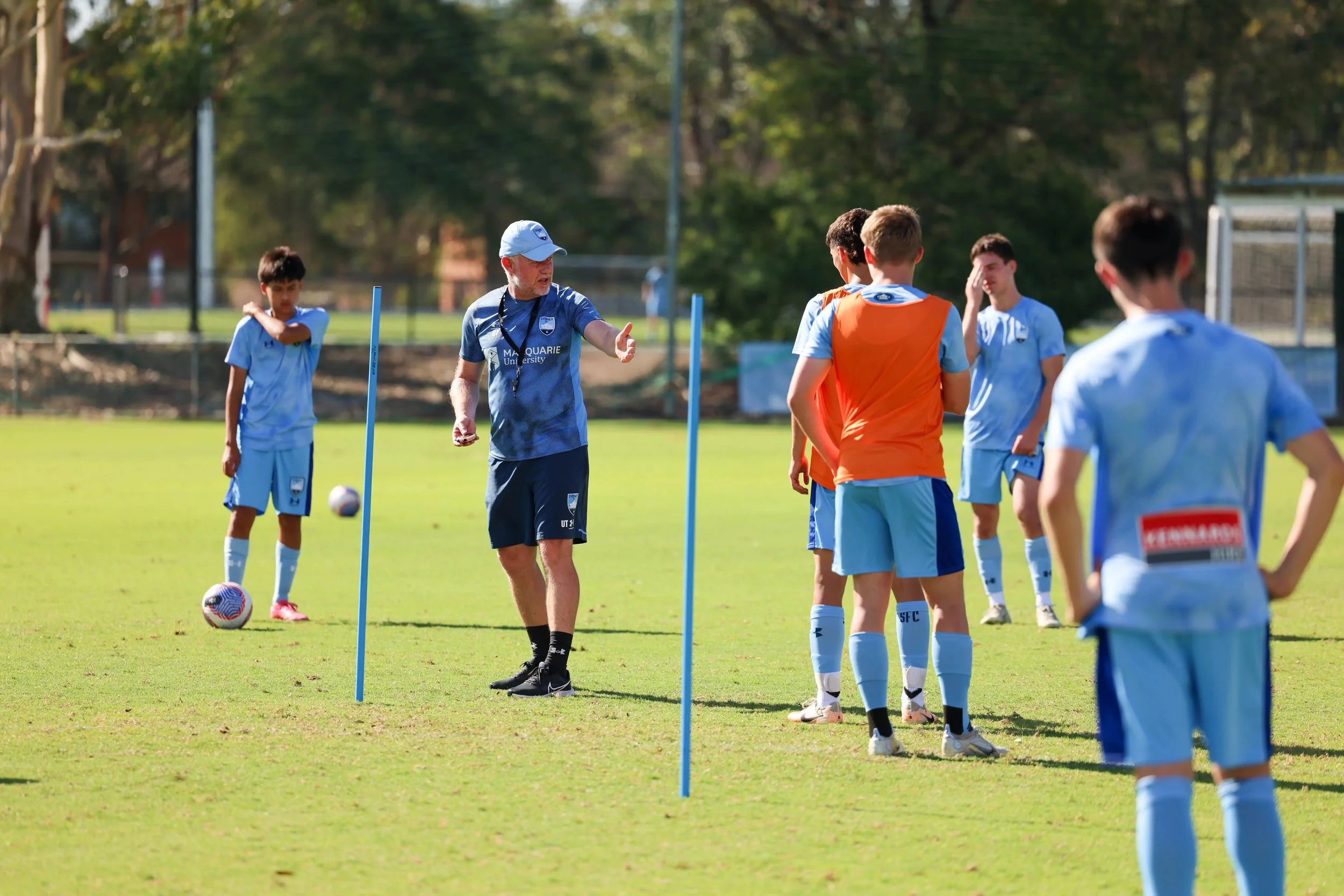
Youth NPL training session taken by top level coach.
Fees reflect the level of investment. NPL registration typically ranges from $1,500 to $3,000+ per season, depending on the club and age group, with older age groups (U16–U18) generally costing more. This usually covers coaching, facilities, and administration — but kits and additional costs are often extra. Fees are set by individual clubs, not Football Victoria, so they vary.
The standard of competition is noticeably higher than community level. Every player on the pitch has been selected through trials, and the speed of play, tactical organisation, and physical intensity reflect that. For players who are used to being the best on their community team, NPL can be a real eye-opener — the gap between standing out at community level and competing at NPL level is often bigger than parents expect.
Game time is handled differently to community football. At younger age groups, many NPL clubs have policies to balance minutes across the squad to support development. But as players move into the older age groups, selection becomes increasingly performance-based — game time is earned, not guaranteed, and players who aren't meeting the standard can find themselves on the bench or, in some cases, not retained for the following season.
So Which One Is Better?
By now you'll have a sense of how different these two environments are. But here's what it comes down to in practice.
The development gap is real. While NPL players are getting three structured sessions a week with qualified coaches and 30+ competitive games, a community player might be getting one or two sessions and 15 games against inconsistent opposition. Over a full season, that difference in volume, quality, and challenge adds up significantly (I break down what the right training volume looks like by age group in my guide on how often kids should be training). Iron sharpens iron — players develop faster when they're surrounded by others who push them.
But the badge doesn't guarantee everything. Not all NPL clubs are created equal. Some have outstanding programs. Others, frankly, are quite poor. The NPL label alone doesn't mean your child will get world-class development — the quality of the specific club, coaches, and environment matters just as much as the level of competition.
The pressure is a double-edged sword. NPL is competitive by design. Players can be cut. Game time is earned. For players who thrive under pressure, this drives development. For players who aren't ready — emotionally or technically — it can damage confidence and even push them out of the sport entirely.
Community football isn't wasted time — but it has limits. For younger players and those who love the game without elite ambitions, community football is exactly where they should be. But if your child has aspirations to play at a higher level, the longer they stay at community level once they're ready for more, the wider the gap becomes between them and their NPL-playing peers.
My honest perspective: I've worked in the NPL system and I've chosen to step away from it — not because I don't rate it, but because I believe I can do more for individual players outside of it. As an NPL coach, I was coaching a squad. Now, I can focus entirely on helping each player reach their individual potential. That said, I want all of my serious players to be playing NPL. The quality, the competition, and the development environment are a clear step above community level. The fact that I work outside the system but still push my players into it should tell you how strongly I feel about it.
How to Know If Your Child Is Ready
This is the question I get asked most, and there's no universal answer. But from my experience coaching players across both levels and helping players transition from community to NPL, here are the indicators I look for:
Technically, they're consistently ahead of their peers. Not just on their best day — consistently. Their first touch is clean under pressure, they exhibit high levels of ball mastery, they can use both feet, they're comfortable taking players on, show good passing range, and they're making decisions with the ball that show real game understanding. If they're dominating community football technically, they may be ready for a higher challenge.
They want it — not just the parents. This matters enormously. NPL requires a level of commitment that only works if the player is genuinely motivated. If the drive is coming entirely from the parents, the player will struggle with the demands and the pressure. How they approach every training session, not just games, will show how much they want it.
They can handle setbacks. NPL is a more demanding environment. Players get coached harder, competition is fiercer, and not every game goes your way. A player who drops their head after a mistake or can't recover from a tough session isn't ready yet — regardless of their technical ability.
They're physically and mentally ready for the commitment. Three or more sessions per week, 40 weeks a year. That's a significant load for a young person. Consider whether your child — and your family — can sustain that alongside school, social life, and other interests.
Every player is different. I've had players who pushed to make it into NPL, just scraped into a squad, and then lost all confidence when they found themselves among the weaker players on the team — in some cases they've gone backwards in their development. On the other hand, I've had players in the exact same scenario who were energised by the step up. They started training with me more often, became laser-focused at both my sessions and club training, put in extra work on their own, and within a year became some of the strongest players on their team. So as frustrating as this answer might be — it depends on the player.
One thing I always encourage, as long as the player is at least near the level, is getting to as many NPL trials as possible. Even if I don't think they're quite ready to earn a spot, the exposure is invaluable. Trials let them experience the environment first-hand — the intensity, the standard, the pace. If we're concerned about them being discouraged, we make sure they go in with managed expectations: "This is for you to experience the environment, so that when we've got you more prepared, you're comfortable and ready." Plus, the sheer number of trials takes the pressure off any single one. And it can be extremely motivating to see the level they're working towards. We treat every player as mature, we act in their best interests, and because of that they trust the process.
What Happens If They're Not Ready Yet
Not every player is ready for NPL the first time they trial — and that's not a failure. What matters is how you use the time in between.
The risk of moving too early is real, particularly for players who are confidence-driven. A player who's thriving at community level gets accepted into an NPL squad, and suddenly they're getting limited game time, feeling average among more talented kids, and in some cases being coached in ways that are more discouraging than developmental. The way I see some coaches treat young players at this level is very disappointing, to say the least. For the wrong player at the wrong time, this environment doesn't build resilience — it breaks confidence and can push them away from the game entirely.
In some cases, the better path is to stay at community level for one more season while becoming more intentional about development. This is where my private sessions and small group training come in (see my post ‘Is Private Coaching Worth It’) — we can increase the intensity, expose the player to higher-quality competition through our group scenarios, and build the technical and mental foundations they need (the attributes scouts are looking for), all while they continue playing regular games and enjoying their football at community level. When they trial the following year, they're not just scraping in — they're arriving prepared to compete.
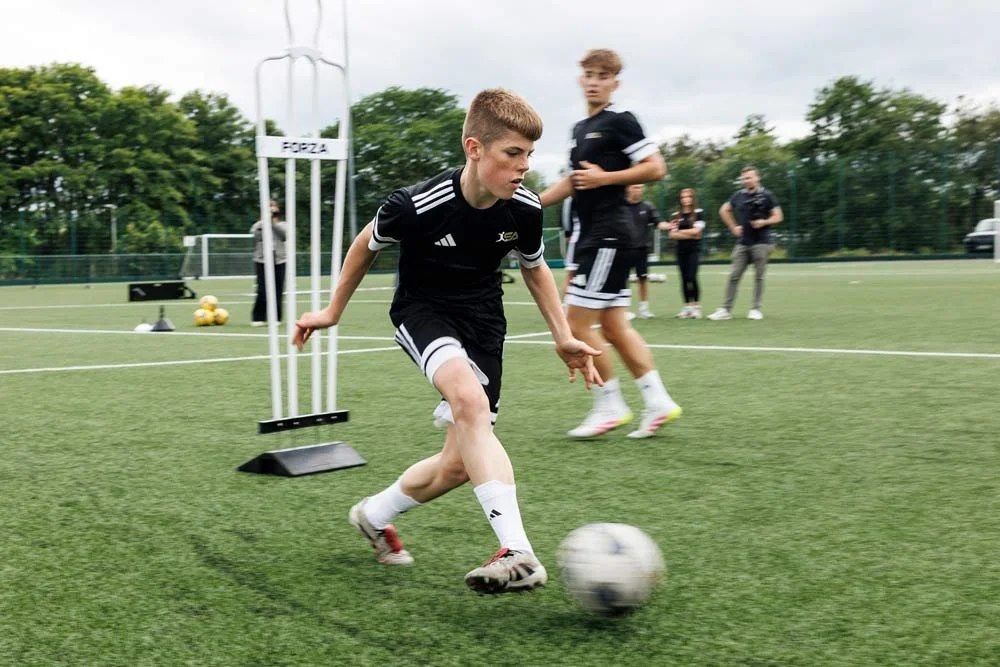
Private soccer training session to prepare players for NPL and beyond.
I've seen this first-hand. I had a player come to me after being let go from an NPL club. They were falling out of love with the game, felt like they'd gone backwards, and were genuinely discouraged. We started training together while they played at community level, and I encouraged them to seek out other competitive environments like futsal to keep their intensity up. With consistent coaching, their game improved considerably — not just technically, but in their confidence and mentality. The following season, they trialled for a different NPL club — a better one than the club they'd been let go from — earned a spot, and went on to thrive there.
Making the Decision
There's no single right answer. Community football and NPL serve different purposes, and the best pathway depends on where your child is right now — not where you hope they'll be.
Part of what I do — beyond the technical coaching — is help families navigate exactly this decision. As someone who has played at different levels, coached at community and NPL, selected players for NPL and representative squads, and guided players from community football into A-League academy programs, I'm well placed to give honest, informed advice on where your child sits and what the right next step looks like. I see myself as much as a mentor and advisor as I am a coach. The training is one part of it — but helping players and families understand the pathway, set realistic goals, and make smart decisions about their development is just as important.
If your child is at community level and wants to reach NPL, I can help bridge that gap — building the technical skills, game intelligence, and confidence that NPL trials are looking for, while also advising on timing, club selection, and readiness. If they're already at NPL level and want to push further, we work on the details that separate good NPL players from those who catch the eye of A-League academy scouts.
I offer a free trial session so you can see what this looks like first-hand. Get in touch to book yours, or visit cdprivatesoccercoaching.com.au to learn more.
Frequently Asked Questions
Can my child play community football and trial for NPL at the same time? Yes. Players typically trial for NPL in October while still registered with their community club. If they're offered a spot, they transition to the NPL club for the following season. If not, they continue at community level — there's no downside to trialling.
What age should my child start trialling for NPL? NPL junior competitions start at U13 (from 2026), with most clubs fielding junior teams through to U18. There's no "right" age to start trialling — readiness matters more than age. Some players are ready at 12, others benefit from staying at community level until 14 or 15 and arriving more prepared.
Is it too late if my child hasn't played NPL by U15 or U16? Not at all. Players enter and re-enter the NPL system at all ages. I've worked with players who didn't reach NPL until U15 or U16 and went on to thrive. What matters is the quality of their development leading up to that point, not how early they started.
How much does NPL cost compared to community football? Community registration is generally $300–$600 per season. NPL typically ranges from $1,500 to $3,000+ depending on the club and age group, before kits and extras. Fees are set by individual clubs, so always check directly.
Does my child need private coaching to make it into NPL? It's not a requirement — but it helps significantly. Community training alone often doesn't provide the volume of repetition, individual feedback, or tactical development that NPL trials are looking for. Private coaching fills those gaps and accelerates readiness.