
How to Stand Out at Soccer Training, Not Just on Game Day
Here's something most players don't realise: soccer training is just as important as game day when it comes to how your coach sees you. For a lot of coaches, particularly at younger ages, it is considerably more important.
Game day is the product. Training is where the work happens, where habits are built, where coaches decide who they trust and who they don't. The player who coasts through training but turns it on for the weekend? Coaches see straight through that. There are a couple of players at the absolute peak of the game who can get away with this, but unless Messi is reading my blog, that is not you. The player who brings the same intensity to a cold and windy Tuesday night session as they do to a Saturday morning game is the player who earns trust, earns game time, and earns the coach's respect.
Pep Guardiola has said it as clearly as anyone: "If you train badly, you play badly. If you work like a beast in training, you play the same way."
I've coached hundreds of sessions across community, NPL, and private coaching. I've watched players at every level, and I can tell you that the ones who stand out at training are rarely the ones you'd expect. It's not always the most talented player. It's the one who does the things that most players don't even think about.
This post is about what those things actually are.
Key Takeaways
Coaches form their opinions about players at training, not just on game day
The players who stand out aren't always the most talented soccer players. They're the most consistent, engaged, and intentional
What you do without the ball, between drills, and when the coach isn't watching says more about you than your best moment in a game
Coachability is not just listening. It's applying feedback immediately and visibly
The habits you build at training are the habits that show up under pressure on game day
What Soccer Coaches Are Actually Watching For
Most players think their coach is watching their best moments. The goal, the nutmeg, the defence splitting pass. And yes, coaches notice those things but that's not what forms their opinion of you.
What coaches are really watching is your pattern. Not your highlight, your pattern. Are you consistent? Do you bring the same level of effort and focus every session, or do you have good days and bad days depending on your mood? Do you switch off when the drill doesn't involve you, or are you locked in even when you're waiting for your turn?
I notice everything. I notice which players jog back to the line and which ones walk. I notice who's paying attention when I'm explaining something and who's talking to their mate. I notice who picks up the cones at the end without being asked. These things sound small but they're not. They tell me who takes this seriously and who's just going through the motions.
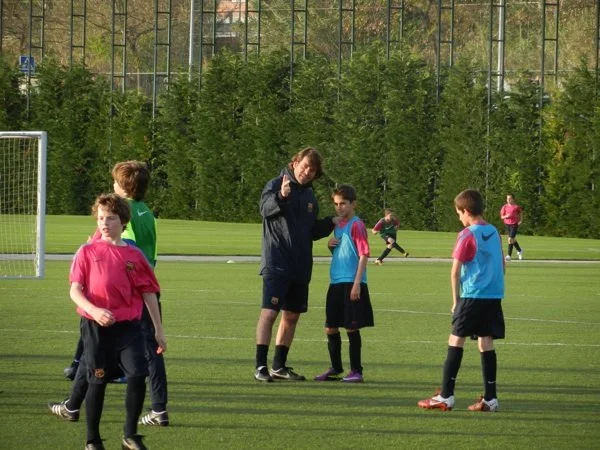
I had a player who wasn't the most gifted technically, but every single session they were the first one ready for each drill, they listened to every instruction, and they trained every session like it was the World Cup Final. Within six months they were one of the best players in the group. I have also seen the opposite. The player with natural ability who performs when they feel like it, is easily distracted, and lacks respect for their coaches and teammates. Before long, they're sitting on the bench and getting kicked out of teams. Good coaches want to help players get better, but it takes two to tango. Players who make it as easy as possible for the coach to help them are the ones who get the most help. Funny that.
The Things That Actually Make You Stand Out
There's a lot of generic advice out there about "working hard" and "having a good attitude." That's not wrong, but we can probably be more specific. Here's what actually separates the players who stand out from the ones who blend in.
Intensity from the first minute to the last. Not just effort, but intent. Every touch should have a purpose. Every pass should be aimed somewhere specific. Every run should be at a speed that challenges you. The players who drift through the first fifteen minutes and then "warm up" into the session have already told their coach something. The ones who are sharp from the first whistle send a completely different message.
What you do when the coach isn't looking at you. This is the biggest one. When the coach is working with another group, or explaining something to another player, what are you doing? Standing still? Chatting? Or are you getting extra touches, staying active, staying in the session mentally even though no one is watching you? I promise you, coaches notice. And the players who stay engaged when they think no one is looking are the ones coaches trust the most.
How you respond to mistakes. Every player makes mistakes at training. That's the whole point. You're there to push yourself into areas where you're not comfortable yet. The question is what happens next. Does the player drop their head, go quiet, get frustrated, blame others or go into their shell for the next ten minutes? Or do they reset, go again, and attack the next opportunity with the same energy? The second player is the one who develops. The first one is the one who stays where they are.
Communication. Not just talking for the sake of it, but genuinely useful communication. Calling for the ball. Letting your teammate know someone is behind them. Organising your group during a drill. Young players are often quiet at training because they don't want to get it wrong or look silly. But the players who communicate, even imperfectly, show their coach that they're reading the game and thinking about more than just themselves.
Coachability. Everyone says they're coachable. But there's a difference between nodding when the coach gives you feedback and actually applying it. Right there, in that session. If I tell a player to check their shoulder before receiving, and the very next time they get the ball I see their head turn before they receive it, that tells me everything. It tells me they listened, they processed it, and they acted on it. That is coachability. It's not a personality trait. It's a skill, and the best players are brilliant at it.
Training Is Not a Warm-Up for Game Day
One of the biggest mistakes I see in young players is treating training as something they have to get through before the real thing on the weekend. Training is not the warm-up for game day. Training is where you get better. Game day is where you show what you've been working on.
The players who improve fastest are the ones who approach every training session with a specific focus. Not just "I'm going to work hard today" but "I'm going to focus on my first touch out of my feet" or "I'm going to scan before every pass." When you train with that level of intention, you get more out of a single session than most players get out of a month of just showing up.
This is one of the things I love about private coaching. When I work with a player, we're constantly identifying the specific areas they need to develop. That awareness doesn't just stay in our sessions. Players start carrying it into their club training naturally. They start noticing things about their own game that they didn't before (enhanced by our video analysis work), and they start using every training session as an opportunity to work on them. That shift in mindset, from just attending training to actively using it, is one of the biggest accelerators of development I see.
I had a player who was technically very good but was getting overlooked at club level. When we started working together, it became clear that they were switching off during club training, doing the bare minimum, and then wondering why their coach wasn't giving them opportunities. Once they started bringing real intensity and focus to every session, treating each drill as a chance to get better rather than something to get through, their coach noticed within weeks. They went from being on the fringe to being one of the first names on the team sheet. Nothing changed technically. Everything changed in how they approached training.
What Soccer Coaches Don't Care About (As Much As You Think)
While we're being honest, let's talk about the things players worry about that coaches care far less about than they assume.
Your worst mistake. Players often leave training fixated on the one bad moment. The missed shot. The bad pass. The time they got skinned in a 1v1. Your coach has probably already forgotten it. What they remember is how you responded to it, not the mistake itself.
Whether you scored in the game at the end of training. Scoring goals in training is great, but it's not what coaches are evaluating. They're watching your movement, your positioning, your decision-making, your effort off the ball. A player who doesn't score but makes five runs that stretch the defence and creates space for others is more impressive to a good coach than a player who taps in a goal but walks around for the rest of the session.
Looking the part. I mention this only because some young players genuinely worry about it. Your boots, your kit, your gear. None of it matters. Good coaches care about what you do on the pitch, not what you're wearing when you do it.
The Compound Effect
Here's the thing about training. One great session doesn't change anything. One bad session doesn't ruin anything. What matters is the pattern over weeks and months. The player who brings 8 out of 10 effort every single session, without fail, for an entire season will develop more than the player who brings a 10 one week and a 5 the next.
Consistency is the most underrated quality in youth football. It's not exciting. It doesn't make highlight reels. But it is the single biggest predictor of which players improve and which ones don't. The players I've seen make the biggest jumps, from community to NPL, from NPL to academy, from good to genuinely impressive, are almost always the ones who were boringly consistent in how they approached every session.
If you take one thing from this post, let it be this: how you train is how you play. The habits you build in training are the ones that show up under pressure on game day. If you train with intent, focus, and energy, that's what comes out when it matters. If you coast through training and hope to flip a switch on the weekend, you're building habits that will let you down exactly when you need them most.
Ready to Train With More Intent?
If you want to get more out of every training session and start developing faster, focused private coaching can help. We work on the specific technical skills you need, set clear goals for your development, and build the habits that make coaches take notice.
I offer a free trial session so you can see what intentional, focused development looks like. Get in touch to book yours, or visit cdprivatesoccercoaching.com.au to learn more.
Frequently Asked Questions
-
Absolutely. Coaches pick their starting lineup and make substitution decisions based on what they see at training all week, not just what happened last game. If two players are similar in ability, the one who trains better will almost always get the nod.
-
Skill matters, but it's not the only thing coaches evaluate. Effort, consistency, communication, coachability, and attitude are all within your control regardless of your current technical level. Players who maximise these areas often overtake more talented players who don't.
-
This is tough, but the answer is that training is exactly where you change that situation. If you respond to limited game time by dropping your effort at training, you confirm the coach's decision. If you respond by training harder and with more focus than anyone else, you make it impossible for them to ignore you.
-
Yes. Asking your coach "what can I work on to improve?" after a session shows maturity and a genuine desire to get better. Most coaches will respect this and give you honest, useful feedback. Just make sure you actually act on what they tell you.